The need to know the identity of those who own a cell phone or who acquires a prepaid chip is the axis of the National Cell Phone Registry on which the Government and mobile operators work. To this end, the Communications Entity (Enacom) was instructed to implement a mechanism within 15 days so that companies providing cell phone service can identify the owners of the lines.
Red numbers
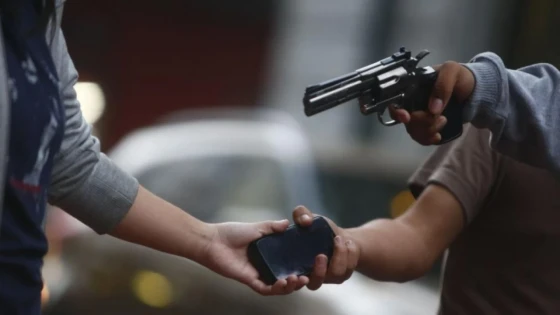
Some 5,000 cell phones are stolen in Argentina per day, within the framework of a criminal activity that has increased by 15 percent since 2014 and that generates a trade illegal of more than 200 million pesos per month.
The amount of the thefts was established by the National Communications Agency (Enacom), which depends on the Ministry of Communications of the Nation, while the head of the Cybercrime Division of the Metropolitan Police, Carlos Rojas, pointed out that "it is exponential to the development of technology and has skyrocketed since the emergence of smartphones."
"These stolen cell phones are one hundred percent in the hands of criminals" through of resale both to unscrupulous users "and to drug traffickers and kidnappers," said Commissioner Rojas.
In Process
Work to combat this problem began in May, when ENACOM joined the "we care" campaign of the association of mobile telephone companies in the region, GSMA, by which they ask customers to take into account the IMEI of the phone they purchase, so that in case of theft, they can give this number, which is what identifies the equipment.
Thus, the operators transfer the equipment number to a "black list", so that none of them activate it as a new user.
Currently, the process of identifying mobile devices and lines is part of stage 2 of the development of the National Cellular Registry.
With the new procedure, whoever buys a prepaid chip will only be able to make emergency calls, and will only have the line active when they have validated their identity through a series of queries like those used by banks today.
In this case, the data revealed by the user through the system will be contrasted with the records of people and databases that the State has, so that when the matches are verified, the operator activates the line and includes the user as a client.
15 days to define the identification mechanism for its users.
"The obligation to nominate the telephone lines will be the responsibility of the Service Providers. of Mobile Communications throughout the country, who must develop, operate and manage at their own expense the systems to be implemented", established the regulations published today in the Official Gazette.
In addition, the providers must host the information in a secure, audited and lasting manner, and must be available for the eventual request of the Judiciary or the Public Ministry.
Courts The information from the mobile operators could be required by the Judiciary.
Updated on: 17/11/2016 00:00:00
Source of Information: Telam / Dia a Dia / BigBang