To understand the new functionality, I will remind you how WhatsApp worked before the change.
When the sending user sends a message to the recipient:
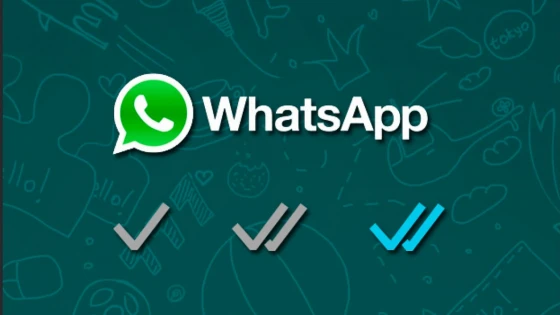
- One Tilde: Confirms that WhatsApp received the message from your device.
- Two tildes: It means that WhatsApp delivered the message, it arrived on the recipient's device, which does not mean that there was read.
What's new
This new functionality applies, if you installed version 2.11.432 for Andorid and 2.11.1919 for BlackBerry, and consists of informing the sender by showing two blue ticks, once the recipient has read the message.
Although there were previous controversies about whether or not the message had been read, this clarifies it, but new problems arise for users. The double blue tick is the perfect excuse, "the test" to reproach the recipient if they do not respond within the expected time, especially those slightly compulsive users. I suppose that in a certain part, it affects the privacy of the receiving user, perhaps he is busy at that moment and cannot respond, or does not want to do so, well time will tell if the change is correct or not.
How to avoid it
As they say "The law is done, the trap is done", the recipient users who have Android on their devices will be able to temporarily prevent WhatsApp from informing the sender that it has read the messages. To do this you must follow the following steps:
- Open WhatsApp
- Go to the list of general messages
- Go to the "Settings" option
- Go to "Notifications"
- Go to "Pop-up notification"
- Select the option that the user wants ("Only with screen on", "Only when the screen is off", "Always show pop-up element").
- When it arrives The message will be displayed on the desktop screen. At that moment press the "Home" button.
This way you can see it as a pop-up notice and not from WhatsApp.
The option is to add the so-called Widgets. At least for now, WhatsApp allows you to read each and every one of the messages without the double accent appearing.
Conclusion
At the moment there is a certain discontent among users expressed in social networks in this regard, but I doubt that they will stop using WhatsApp for two reasons, one because of the simplicity it offers in its interface and another, it is for savings, given that users have little by little forgotten about the SMS that in most cases are paid.
And you, what do you think?

Sistemas a medida y Automatizaciones
Desarrollamos sistemas a medida que automatizan procesos, mejoran la gestión y te permiten escalar tu negocio con soluciones ágiles y flexibles.