Very good article by Ricardo Sametband, so I'm sharing it with you.
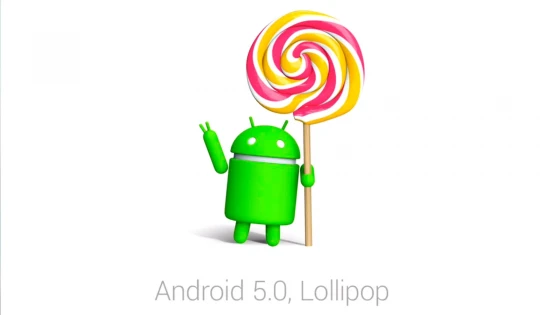
Android Lollipop, the version of the operating system for mobile phones and tablets that comes after KitKat, is now official. The waiting time for it to be available for the different models of smartphones and tablets now begins.
The official availability of this version for a specific model depends on its manufacturer, and eventually on the operator that sold it; she has the final say.
In the coming weeks it will arrive in the Nexus line: 4, 5, 7, 10 and the Google Play editions, which offer "pure" Android on devices that usually have a modified version (such as the HTC One, the Samsung Galaxy S4, Sony for the rest of the Nexus) and how long it takes for each manufacturer to make the corresponding adaptation; HTC, for example, says it will take 90 days after receiving the code:
Motorola was the first to confirm that it will offer Android Lollipop for all versions of the Moto G and Moto country);
HTC will update at least the One M7 and the One M8; it is likely that the Mini and several Desire versions as well;
Samsung did not give information on this, although it is assumed that the Galaxy S4 and S5, and Note 3 and Note 4 should be updated, the same as the S4/S5 mini.
LG also did not inform what it plans to do, but the G2, G3 and G Flex should receive the update, the same as the G2 Mini.
And the rest? Although manufacturers seem to have understood the value of updating Android, final availability will depend on several factors: interest in updating a particular model; of the region (some models have different components depending on the continent, and some are privileged over others) and, ultimately, of the operator, which is the one that approves - or delays - the update, something that does not affect equipment that is sold offline. Eventually, in addition, alternative versions of Lollipop such as Cyanogen will appear, which are usually a good option to access an updated version of Android if the device is orphaned.
As we said when Google announced Android 5, there are no specific minimum requirements to run Lollipop, but if it is capable of running KitKat you should be able to use the new version. The Moto E, with a 960 x 540 pixel qHD screen, 1 GB of RAM and a dual-core chip, which will have Android Lollipop, is a good parameter.
What Lollipop brings
The most noticeable change for the user is visually: Material Design is Google's new graphic language for Android, very colorful and with a flat design, aiming to maintain a uniform appearance on multiple types of devices (smartphones, tablets, smartwatches, televisions, etc.); content layers are flat but 3D and can overlap; The animations change, the notifications will have color and the Google Now cards will be more similar; In addition, notifications will have a greater presence on the lock screen and their visibility will change depending on the time (so that they do not disturb at night, etc.). The three basic Android buttons (home, back, view of applications in use) are now a circle, a triangle and a square.
Android Lollipop changes the internal engine, finally, to ART, abandoning Dalvik; Instead of compiling part of the applications each time they are run, it does so when they are installed, in the style of traditional operating systems; According to Google, this way applications run up to four times faster and should improve battery life.
It now allows multiple user accounts on a phone (as it already offered on tablets) and a guest mode; The view of active applications changes to a sort of endless display that shows open programs and also specific panels for an application; Used applications, searches, photos and music are synchronized between devices, and a backup copy of programs and sessions can be made, something that was possible with third-party software but is now official.
The menu for sharing content of an application is also updated, and the double-tap function to activate the screen (like LG and Nokia) and the movement of the phone to turn it on (like Motorola and Samsung) are now part of Android.
In addition, it adds a emergency battery saving mode, which extends its autonomy by 90 minutes, part of the so-called Volta Project to extend battery autonomy, and which in preliminary tests gave very good results; improvements in connectivity and security: all the content of the device is encrypted from the first moment, a Bluetooth device can be authorized to lock or unlock the device by proximity, etc.
It also incorporates other functions that will not be immediately noticeable to the user, but that give more flexibility to developers, such as thousands of new APIs to access specific functions of the operating system from applications, support for 64 bits, USB audio (to transmit sound in digital form and incorporate new controls), support for OpenGL ES 3.1 graphics, RAW in the camera and manual controls, improvements in the engine to print content, integration with compatible car multimedia systems, etc.
Source: La Nación
Related video

Sistemas a medida y Automatizaciones
Desarrollamos sistemas a medida que automatizan procesos, mejoran la gestión y te permiten escalar tu negocio con soluciones ágiles y flexibles.