This virus is spread by accessing an attachment that comes from a known sender.
The last few weeks have been chaotic for system administrators and computer centers, having to leave their usual tasks to dedicate themselves to cleaning PCs, notebooks and cell phones from a new Trojan virus, which pretends to be a contact of its new victim, sending him an email with an attached file, the receiving user, upon seeing a known sender, trusts himself and no matter how much the message (subject and body of the email) is usually suspicious, it is infected when you click to view the attachment.
That is the crucial moment, where the email manager such as Microsoft Outlook is automatically infected; especially those versions lower than 2016; of the device in use, and the virus adopting the role of the sender, massively sends the same email to all its contacts, becoming a chain that never ends.
Technically, this virus seems to be a mutation of the EMOTET that emerged a few months ago. EMOTET was characterized by sending an attached PDF file pretending to be an invoice for the purchase of a service or product, the truth is that the way it operates is the same, when you tried to open the attachment, you got infected and the headache began.
Current Trojan Features
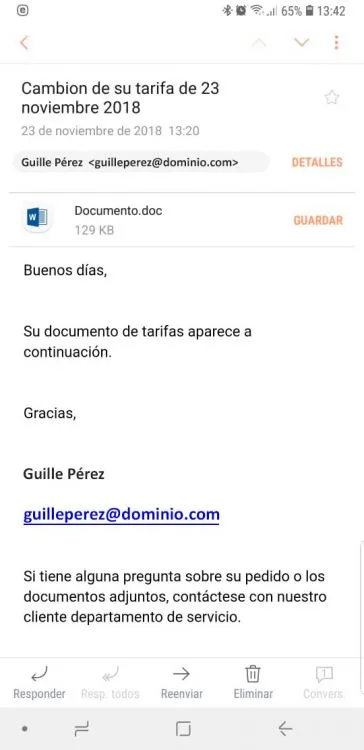
- Email subject: Change of your rate on (day date)
- Email body: Your rate document appears below, thank you
- Sender signature: First and last name, email
- Explanatory note: If you have any questions about your order or the attached documents, please contact our customer service department
- Attachment: Document.doc
What to do in case of infection?
- Ask your server administrator to change the password so you avoid spreading the virus, especially because you are exposing your name and your company.
- Update your antivirus or change it, if you were infected it obviously did not detect it.
- Clean the virus from the device, find it with some software anti-malware.
- In the meantime, use the email service through webmail and not through Outlook.
- Once the cleaning has been achieved, update Outlook to a new version, after 2016.
- Reset passwords.
Warnings for users
- In every email you receive, do not open the attachment, first take time to read carefully, even if the sender is known, if you have any suspicions about the wording of the email, if you were not expecting an attachment, call the sender and see if he sent it to you.
- If you detect that it is a possible contagion, take a screenshot, delete the email immediately and notify your email administrator.
- Call the sender and also warn them of your problem.
Good practices for sending mail
- Use secure passwords, make sure that your technical manager (postal administrator) provides you with passwords that have at least 8 characters, of which contain capital letters, lowercase letters, numbers and symbols.
- If you send attachments, compact them in ZIP format, to do this ask your trusted IT specialist for advice. Adopt this practice and require your contacts to send it this way.
- Spread these tips to your contacts and coworkers.
In case of infection, follow these instructions: Click here
For prevention: List of antivirus programs that detect it
Updated on: 28/11/2018 00:00:00
Disclaimer: The information presented does not constitute financial, investment, commercial or other advice and is solely the opinion of the writer. By using the information on this site, you agree that we are not responsible for losses, damages or injuries arising from the use or interpretation of the information.

Soporte Web y mantenimiento
Nos encargamos de mantener tu sitio web o sistema actualizados, seguros y funcionando correctamente.